Why your AI strategy needs an EI strategy too
Every organisation we talk to right now is somewhere on the AI strategy path. Some have a clear plan; most are still drafting one. But ask the same group about their EI strategy – their plan for emotional intelligence – and very few have even considered it.
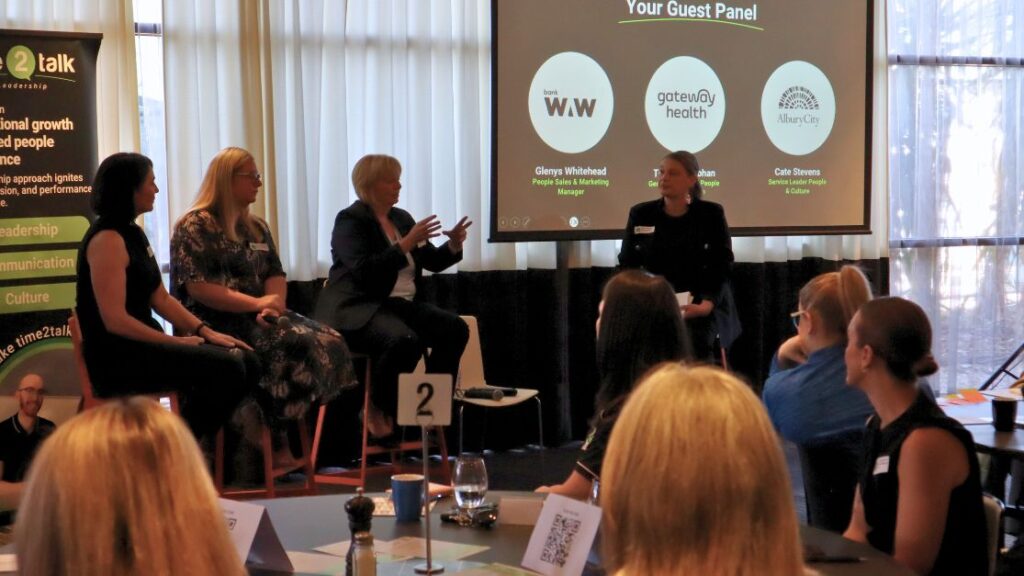
That gap is the reason we ran our latest P&C Network masterclass, The Human Edge: Aligning your EI and AI Strategy. With a room full of HR, P&C, learning and safety leaders from local government, retail, university and corporate sectors, the discussion told a clear story: AI strategy is moving fast, while EI strategy is barely moving at all. That’s a problem more organisations should be acting on.
The stats that raise red flags
We opened the session with a series of live polls:
- Do you have an AI strategy
- Do you have an EI strategy?
- Is HR or P&C actually at the table when the AI strategy gets built?

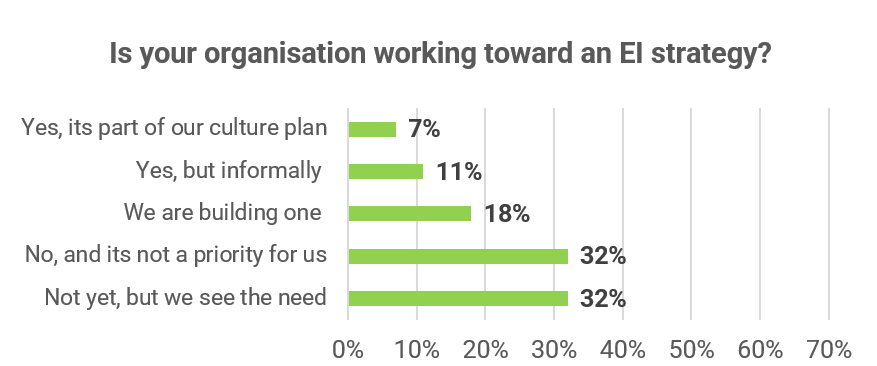
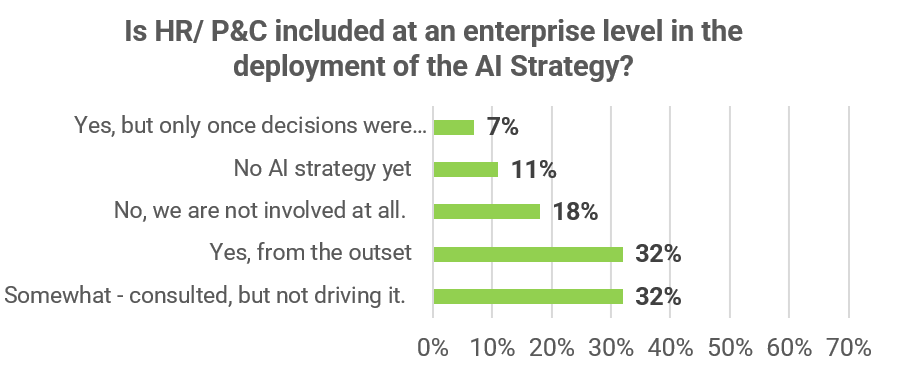
The pattern was consistent. Plenty of organisations have an AI strategy in progress. Far fewer have anything close to a formal EI strategy – most described it as “informal” at best, or “not a priority” at worst. And when we asked whether HR or P&C had a seat at the table for AI strategy development, the most common answer was “somewhat – consulted, but not driving it.”
That’s the pattern we’re seeing everywhere. AI is being built as a technology project, and the people who ultimately need to drive the change are being left out of the picture. Without strong EI skills in your organisation, your AI transformation will be slower, harder and more costly.
Why emotional intelligence is a key strategic piece
The World Economic Forum’s most recent report on core skills found that almost nine of the top ten skills organisations need right now are emotional intelligence skills. Leadership and social influence, resilience, flexibility and agility have all jumped in importance faster than almost anything else on the list.
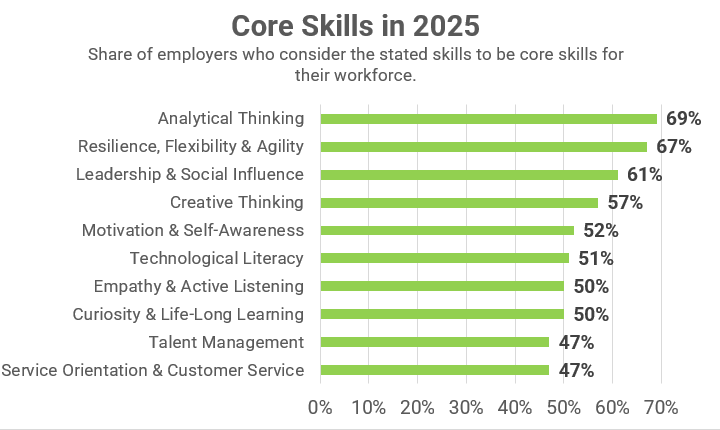
Source: World Economic Forum, Future of Jobs Report 2025
At the same time, research tells us emotional intelligence is declining. It’s not a dramatic drop, but it’s a steady one, and it’s been happening since 2019 (Freedman et al., 2025). Emotional literacy, self-regulation, empathy and systems thinking – the very skills leaders need to guide people through AI transformation – are all on the way down.
So we’ve got rising demand for EI and falling supply, right at the moment organisations are asking their leaders to guide teams through one of the biggest shifts most workplaces have seen.
Thinking fast, thinking slow, and artificially
In Daniel Kahneman’s theory of two systems of thinking, System 1 is fast, automatic and intuitive – it’s the words that come out before your brain has properly caught up. System 2 is slower and more deliberate – it’s where we actually reason things through and critically evaluate what’s in front of us.
Recent research from Shaw & Nave (2026) adds a third system to that model: artificial thinking. This is what happens when we hand a decision over to an AI tool, rather than working through it ourselves, and then accept the answer as our own thinking.
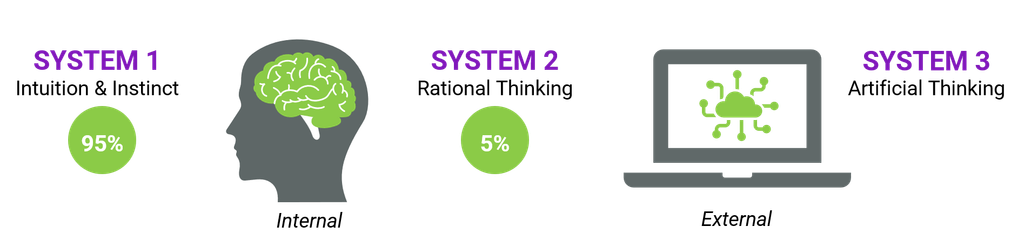
That’s fine in some situations. The risk comes when more important decisions get outsourced and accepted as fact without question. Shaw & Nave (2026) call this cognitive surrender – taking whatever AI produces and running with it, without bringing it back to your own judgement.
Think about how we use a calculator. We hand over the maths, but we still own the decision that follows.
With AI, we’re increasingly seeing people hand over both the task and the decision, and that’s where things get tricky.
What this means for your organisation
Based on what we’re seeing across our client work, here’s where we’d encourage organisations to focus:
- Build EI muscle alongside technical AI training. Technical skills alone don’t prepare people to use AI well. The organisations getting this right are teaching people how their own thinking works, not just how the tool works.
- Get HR and P&C into the AI strategy conversation early. Not as an afterthought once the technology decisions are locked in, but as part of shaping the strategy from day one.
- Teach people to check their own thinking. Building the habit to pause, question and verify before accepting an AI-generated answer as fact goes a long way.
The key takeaway
AI strategy without an EI strategy is only half a plan.
The organisations that get this right won’t be the ones with the flashiest tools. They’ll be the ones whose leaders can navigate both the technology and the humans using it, at the same time.
If you’d like to talk through what an EI strategy could look like alongside your AI strategy, or you’d like to join one of our P&C Network sessions, we’d love to hear from you.
References
- Boston Consulting Group. (2026). Creating People Advantage 2026: 4 power moves for the CHRO. https://web-assets.bcg.com/89/ff/e32161f94b24b52632c7389deba9/creating-people-advantage-report-mar-2026-edit.pdf
- Freedman, J. M., Freedman, P. E., Choi, D. Y., & Miller, M. (2025). The Emotional Recession: global declines in emotional intelligence and its impact on organizational retention, burnout, and workforce resilience. Frontiers in Psychology, 16, 1701703. https://doi.org/10.3389/fpsyg.2025.1701703
- Kahneman, D. (2012). Thinking, Fast and Slow. Penguin UK. https://www.penguin.com.au/books/thinking-fast-and-slow-9780141033570
- Matz, S. (2026, August 14). Is AI turning us all into the same person? [Video]. TED Talks. https://www.ted.com/talks/sandra_matz_is_ai_turning_us_all_into_the_same_person
- Shaw, S. D., & Nave, G. (2026). Thinking – Fast, Slow, and Artificial: How AI is Reshaping Human Reasoning and the Rise of Cognitive Surrender. The Wharton School of the University of Pennsylvania. https://doi.org/10.31234/osf.io/yk25n_v1